Monday, December 17, 2012

EKU Search Meeting Provides Little Clarity on Desired Candidate


Search Profile Reveals Little Direction
..or is it, Too Many Directions?

Today I had planned to write about the professional characteristics the EKU Presidential Search and Screening Committee was looking for in our next president. But that’s not really possible.  

We’ve got “a good sense of the kind of individual we're looking for," search firm honcho James Appleberry said, but unfortunately only committee members were allowed copies of the draft profile, so KSN&C cannot provide any semblance of the direction the committee is headed. It‘s not yet clear from this "open meeting" what we are looking for. 

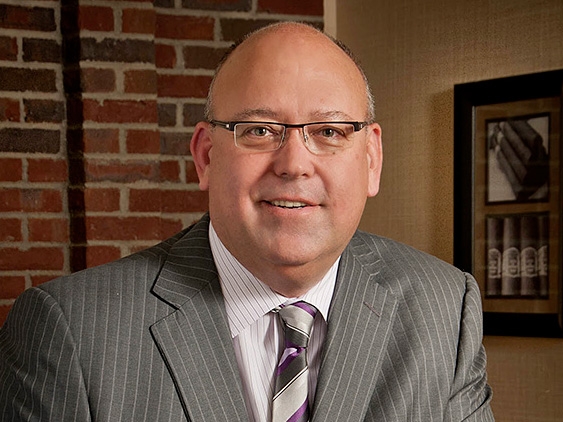
At any rate, this afternoon at 1:05PM, Chairman Craig Turner called to order the Search and Selection Committee for EKU’s 12th president. Turner estimated the selection to be “about 4 months away.”  

After the obligatory underscoring of the “importance of confidentiality” for committee members, the meeting was turned over to Academic Search’s consultants, James Appleberry and Carrie Hauser.

The consultants reported that during their campus visit, “people were very nice” and helped the firm put together the draft profile along with an ad for the Chronicle of Higher Education and other publications. “Our search process is now ready to move forward,” Appleberry announced. 

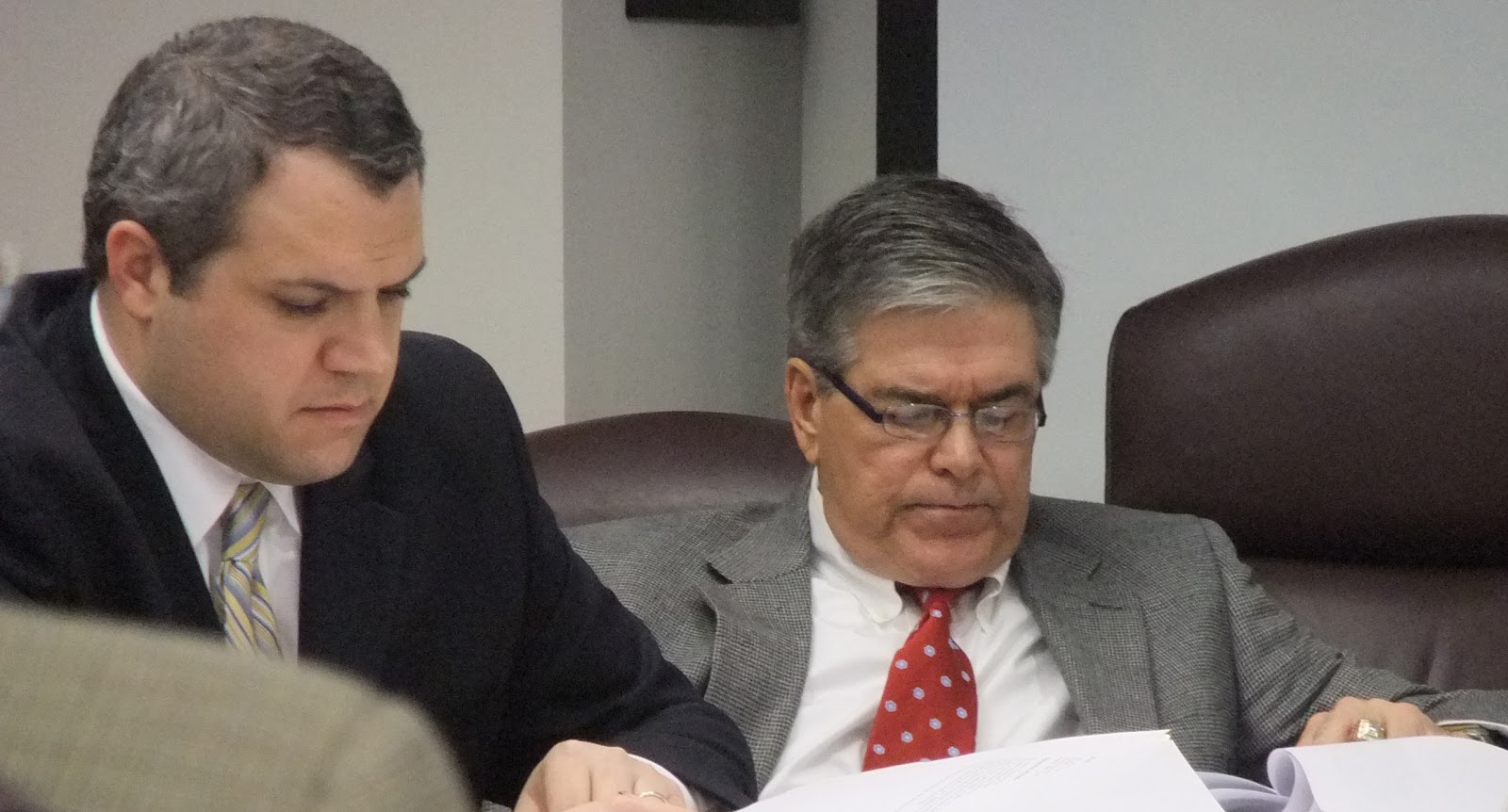
Appleberry underscored that the process would be an open process, with updates posted to the Search Website regularly. But today’s process, while indeed open, shed little light. Faculty representatives Malcolm Frisbie and Sheila Pressley, and others, raised questions about something on Page 3; something on Page 2; something on Page 4; something on Page 7; something else on Page 3, but I’m not sure what. There was something about whether faculty and students were unique enough to brag about; whether any candidate would know what CPE is; something about Model Lab School; whether academic excellence should be stated positively or negatively; something about the 3rd bullet point; something about Law Enforcement; something about Nursing, and whether the Honors Program is unique. 

We will have to wait 24-48 hours to make sense of it, when the profile, which was tweaked by committee members, will be posted to the website.   

Committee members were admonished that they are not representing any group, but that they represent the future of the university. “Do not think you represent any particular interest group…please put on your university-wide hat,” Hauser said. “We have promised the candidates that we will make every attempt to keep names confidential”…members who breach confidentiality could be open to a personal lawsuit.

Hauser then reviewed the schedule for advertising.  A “one-page” ad (which I’m not at all sure is the same thing as a full-page ad) is planned for the 2nd edition of the Chronicle after the holidays. The ad is intended to drive people to the profile on the Academic Search website.  Online ads are expected to be up by Jan 11th

Candidates are being told to have their applications complete by Feb 14th to receive “full consideration.” 

“Our job is to go out and mine…applicants,” Hauser said.  

 “We are Looking for 6 to 8 really good candidates,” Appleberry said. 

The committee members were presented with a screening tool that could be used to help them screen candidates and they actually took a few minutes to practice using it on a fictitious candidate’s resume. It looked like it could be a useful thing for members to do….except that, you know...only members got to see it.

Members were admonished not to compare candidates by email or discuss rankings outside of the meeting but to only form opinions during meeting after listening to one another. 

The process members will follow is to sign on to Academic Search’s website to review applications online. To safeguard confidentiality, each application is given a number, and members will only refer to candidates by number in their notes. 

The committee’s next meeting will be on Feb 20that 11am and will consist of a closed screening session of 4-5 hours. Members are expected to arrive with their candidates grouped A, B, or C - keepers, maybes and rejects. 

Since visitors were left to divine what kind of candidate EKU is actually seeking, I spoke to Carrie Hauser afterward to get a sense of what we are looking for.  

KSN&C: Are we looking for a custodian of Eastern’s historical mission, or a cutting edge leader for the 21st Century?
 
Hauser: “Both.” 

KSN&C: “Really?”

Hauser: “Yes, all of that.”


Skin in the Game


All licensure area programs should be held accountable 
for the performance of their graduates
--from the report

The Council of Chief State School Officers issued a report on teacher preparation this week. The report, from the Task Force on Educator Preparation and Entry into the Profession, which was co-chaired by Kentucky Education Commissioner Terry Holliday, calls for all state chief state school officers and leaders of the education systems in their respective states to commit to taking ten actions the committee believes will ensure an education workforce prepared to enter the profession ready to teach and ready to lead.

Titled, "Our Responsibility, Our Promise..." the report is intended to be a public policy crowbar for state school chiefs which focuses on "levers for change" and advocates "highly selective admissions and exit criteria" for teacher candidates along with a set of multi-tiered licensure standards and tests which are designed to lead to the closing of the lowest rated programs. The idea is to use policies on licensure, program approval, and the use of beginning teacher performance data to pound malleable institutions into submission, or oblivion. This is what Commissioner Holliday has referred to when he says that  teacher preparation institutions "ought to have some skin in the game."

The report also promises "clear and fair performance rating(s)" for teacher preparation institutions. Clear, I don't doubt. Fair, I greatly doubt. The very idea assumes that colleges can continue to control some meaningful amount of what teachers do in the field. Convince me that's true, and I'll reconsider  my position.

I was thinking back to when I was a principal...and imagined a conversation between a newly-hired young teacher and a hard-charging school reformer - just the kind advocated by the report:
Teacher: "Mrs Goodschool, I understand that you want us to do X...but I learned at UK, that that's not the best approach. Dr Bigbrain taught us another way, so instead, I'm going to do Y."
Principal: "Ha ha ha ha ha ha ha ha ha ha ha ha ha. That's a good one. Remind me. Do all UK professors advocate the same approaches?"
Teacher: "Well, no... "
Principal: "Have I asked you to do anything illegal?"
Teacher: "Of course not."
Principal: "Is there some law that requires us to do anything UK says?"
Teacher: "Well, no, but...."
Principal: "Will UK be conducting your evaluation this year? "
Teacher: "No."
Principal: "Well then, perhaps you don't have all of the information you need to make a sound decision about this. Let me mention one more reason why doing X is a good idea. If you follow MY directions, even if it's the opposite of whatever you were taught in college, you get to keep your job. How's that sound?"
While some useful ideas are presented, the overall approach is typical of the corporate school reform tactics going on in the P-12 world - applied to teachers and teacher preparation institutions.

It seems pretty clear to me that Teach for America does not, and could not, meet the suggested standards, but something tells me they will get a pass, anyway. Whether or not they are good teachers, TFA kids are good test-takers and that's apparently good enough for quantitatively-obsessed policy leaders these days.

This from the CCSSO 
Transforming  Educator Preparation and Entry into the Profession
We believe the entry point on the continuum of development for teachers and leaders is the foundation for the remainder of their career, and we must set a level of expectation that will ensure they are ready on day one. We feel strongly that, individually and collectively, chiefs should commit to the following state actions:

Licensure

1. States will revise and enforce their licensure standards for teachers and principals
to support the teaching of more demanding content aligned to college- and career readiness
and critical thinking skills to a diverse range of students.

2. States will work together to influence the development of innovative licensure
performance assessments that are aligned to the revised licensure standards and
include multiple measures of educators’ ability to perform, including the potential to
impact student achievement and growth.

3. States will create multi-tiered licensure systems aligned to a coherent developmental
continuum that reflects new performance expectations for educators and their
implementation in the learning environment and to assessments that are linked to
evidence of student achievement and growth.

4. States will reform current state licensure systems so they are more efficient, have true
reciprocity across states, and so that their credentialing structures support effective
teaching and leading toward student college- and career-readiness.

Program Approval

5. States will hold preparation programs accountable by exercising the state’s authority
to determine which programs should operate and recommend candidates for licensure
in the state, including establishing a clear and fair performance rating system to guide
continuous improvement. States will act to close programs that continually receive
the lowest rating and will provide incentives for programs whose ratings indicate
exemplary performance.

6. States will adopt and implement rigorous program approval standards to assure that
educator preparation programs recruit candidates based on supply and demand data,
have highly selective admissions and exit criteria including mastery of content, provide
high quality clinical practice throughout a candidate’s preparation that includes
experiences with the responsibilities of a school year from beginning to end, and that
produce quality candidates capable of positively impacting student achievement.

7. States will require alignment of preparation content standards to PK-12 student
standards for all licensure areas.

8. States will provide feedback, data, support, and resources to preparation programs
to assist them with continuous improvement and to act on any program approval or
national accreditation recommendations.

Data Collection, Analysis, and Reporting

9. States will develop and support state-level governance structures to guide
confidential and secure data collection, analysis, and reporting of PK-20 data and how
it informs educator preparation programs, hiring practices, and professional learning.
Using stakeholder input, states will address and take appropriate action, individually
and collectively, on the need for unique educator identifiers, links to non-traditional
preparation providers, and the sharing of candidate data among organizations and
across states.

10. States will use data collection, analysis, and reporting of multiple measures for
continuous improvement and accountability of preparation programs.

Friday, December 14, 2012

The Nightmare Scenario


27 Dead, Including 20 Children, 
At School Shooting In Connecticut

This from The Hartford Courant:
Twenty-seven people, including 20 children, are dead after a shooting at Sandy Hook Elementary School. The gunman killed himself inside the school.

Another person was found dead at 36 Yogananda St. in Newtown, sources told The Courant.

The shootings at the school took place in two rooms, one of which is a kindergarten classroom, sources said. One entire classroom is unaccounted for.

The shooter is dead inside the school, and the situation is secure, said State Police Lt. J. Paul Vance.
Students described being ushered from their classrooms hand-in-hand, with their eyes closed, to the safety of a nearby fire station as police converged on the school.

There were conflicting reports about the identity of the shooter. The state police have not identified him.

Several news outlets, including The Associated Press and CNN, initially identified the shooter as Ryan Lanza and said his younger brother was being held for questioning as a possible second shooter.
The Associated Press is now reporting that the suspect is Adam Lanza, the younger brother, and that the older brother is being questioned.

CNN is no longer identifying the shooter.

A law enforcement official said the boys' mother, Nancy Lanza, works at the school as a teacher. The Associated Press is reporting that she is presumed dead.

The official also said Ryan Lanza's girlfriend and another friend are missing in New Jersey.
Another official, speaking on condition of anonymity because the investigation was still under way, said the gunman apparently had two guns. A law enforcement official in Washington said one of the guns was a .223-caliber rifle.  

President Obama, in an emotional address to the nation Friday afternoon, said "These neighborhoods are our neighborhoods, and these children are our children."

“I know there’s not a parent in American who doesn’t feel the same overwhelming grief that I do," he said. "The majority of those who died today were children, beautiful little kids between the ages of 5 and 10 years old. … They had their entire lives ahead of them. Birthdays, graduations, weddings, kids of their own."

“Among the fallen were also teachers, men and women who devoted their lives to help their children achieve their dreams,” he said.

Like other parents around the country, Obama said, “This evening, Michelle and I will ... hug our children a little tighter and tell them that we love them … but there are families in Connecticut who cannot do that tonight.”

“While nothing can fill the space of a lost child or a loved one, all of us can extend a hand to those in need, to remind them that we are there for them, that we are praying for them, that the love they felt for the ones they have lost will endure in their memories but also in ours.” ... 

Courant Editorial:  

Unimaginable Sorrow

Children Killed: State stunned; 

mourns loss of life at a school


Not again. Here. In a school.

All over Connecticut Friday, people greeted each other with downcast eyes and a few mumbled words. Many cried, churches opened for prayer, events were canceled. Some veteran police officers and news reporters found it hard to keep their composure. Even the president struggled for composure while speaking of the deaths.

The day felt, to some who remember it, like the chilly day in 1963 when President John F. Kennedy was shot.

Now, as then, the entire state was stunned, dumbstruck, heartbroken. What could drive a fellow human being to walk into a school, a nurturing place, and begin shooting and brutally killing innocent children and educators? What depth of grief for parents who happily sent their beautiful kids off to school Friday morning, maybe held their hands at the bus stop, and now will never see them alive again?

This is not supposed to happen, here, in civilized Connecticut, with its strict gun laws, good schools and churches on the village green.

And yet children were being led out of school and told to close their eyes. It's hard not to think that it's the adults who have been closing their eyes.

The Next Days

According to police, a gunman killed 26 people, including 20 children, before apparently taking his own life Friday morning at Sandy Hook Elementary School in Newtown in one of the worst school shooting massacres in U.S. history. As President Barack Obama said, there isn't a parent in America who doesn't feel overwhelming grief. We think of the dad desperately trying to get information about his 6-year-old in the hospital. The child was the only family he has.

We are in this life, it's been said, to help each other get through it. We do this with ritual and process. In the next days and week, there will be the rituals of wakes and funerals, memorial services and assemblies. They are there for a reason — they help, they are what we have, we must embrace them. There are few occasions as emotionally painful as a child's funeral, and few as necessary.

And then there will be process, starting with the law enforcement and medical investigations, and perhaps leading to changes in public policy. Or — looking at recent mass shootings — talk of change but no actual new laws or policies.

The first response to mass shootings usually has to do with gun control. With the country awash in handguns — 300 million by one estimate — it's not clear if guns can be controlled any longer. The National Rifle Association and other gun lobbyists can take great pride; they've brought gun ownership within reach of every psycho and wing nut with a crazed rage to shoot.

Yet we must try.

Protecting Ourselves

President Obama said Friday that "we're going to have to come together and take meaningful action to prevent more tragedies like this, regardless of the politics." OK, let's start by reinstating the federal ban on assault weapons that Congress so cravenly allowed to expire several years ago.

Hunters don't want or need assault rifles with military magazines; these have no civilian application. Yet it is a tribute to the power of the gun lobby and the sniveling cowardice of Congress that there have been more than 60 multiple shootings since a member of Congress, Rep. Gabby Giffords, was shot in Arizona in 2011 and no action has been taken.

Given the unfortunate availability of guns, it behooves us to examine other areas. In the two mass shootings in Greater Hartford in the past 15 years, at lottery headquarters in Newington in 1998 and a beer distributorship in Manchester in 2010, the perpetrators were disgruntled employees. There is work to do both with workplace security and with mental health assistance for workers who need it. That is true of society at large.

The government has failed to protect us from shooters, but we have also failed to protect ourselves, but getting help for friends or family members who need it. We need to think about social outcasts, about drug abuse, about violent video games and films, about what the Internet is being used for.

But that comes after the ritual, the tears, the incomprehensible sorrow. Kids huddled in one classroom said all they wanted was Christmas. It was not an unreasonable request.


May 18, 1927: Andrew Kehoe, school board treasurer in Bath Township, Michigan, bombed three schools, killing 38 children, two teachers and four other adults, as well as himself, because he was enraged by higher taxes to fund a new school.

August 1, 1966: Charles Joseph Whitman, a student at the University of Texas and a former Marine, killed 13 people, as he took over an observation tower on the campus, before a police officer shot and killed him.

April 20, 1999: Students Eric Harris, 18, and Dylan Klebold, 17, opened fire at Columbine High School in Littleton, Colo., killing 12 classmates and a teacher and wounding 26 others before killing themselves in the school's library.

April 16, 2007: Student Seung-Hui Cho shot and killed 32 people on the campus of Virginia Polytechnic Institute and State University, in Blacksburg, Va., before committing suicide.
Other School Shootings In The U.S. Since 1995

Oct. 1, 1997: Luke Woodham, 16, killed 2 students and injured seven others at Pearl High School in Pearl, Miss. He was also convicted of killing his mother hours before the school shooting.

Dec, 1, 1997: Michael Carneal, 14, opened fire on a group of praying students at Heath High School in West Paducah, Kentucky, killing three and injuring five.

March 24, 1998: Middle school students Mitchell Johnson and Andrew Golden pulled a fire alarm at their school in a small rural Arkansas community and then opened fire on students and teachers using an arsenal they had stashed in the nearby woods. Four students and a teacher who tried shield the children were killed and 10 others were injured.

May 21, 1998: Kip Kinkel, 15, killed two and wounded 25 others in a rampage in the cafeteria of Thurston High School in Springfield, Ore. His parents were found slain at their home.

May 26, 2000: Nathaniel Brazill, 13, shot and killed a teacher at Lake Worth Community Middle School in Lake Worth, Fla.

March 5, 2001: Charles Andrew Williams, 15, shot and killed two students and woulded 13 others at Santana High School in Santee, Calif.

April 14, 2003: Four gunmen opened fire in the gymnasium of John McDonogh High School in New Orleans, killing one and wounding three others.

March 21, 2005: Jeff Weise, 15, shot and killed seven people, five students, a teacher, and a security guard, before killing himself at Red Lake High School in Red Lake, Minn. Weise had shot and killed his grandfather and a woman at his home before driving to school.

September 29, 2006: Eric Hainstock, 15, upset over a reprimand given by principal John Klang of Weston School in Cazenovia, Wisconsin, shot and killed the principal.

October 2, 2006: Charles Carl Roberts IV, a 32-year-old truck driver, shot 10 girls, killing five before turning the gun on himself in a rampage at a one-room Amish schoolhouse in Nickel Mines, Pa.
Feb. 14, 2008: Steven Kazmierczak, dressed all in black, stepped on stage in a lecture hall at Northern Illinois University and opened fire on a geology class. Five students were killed and 16 wounded before Kazmierczak killed himself.

February 27, 2012: T.J. Lane, 17, killed three students and wounded two others during a shooting rampage at Chardon High School in Chardon, Ohio.

Thursday, December 13, 2012

Green River Scores RTTT District Prize

 This from Politics K-12:
 
Arne Duncan Picks 16 Race to Top District Winners
 
Sixteen winners—including three charter school organizations—will share $400 million in the Race to the Top district competition, the U.S. Department of Education announced today.

Traditional districts such as Carson City, Nev., Guilford County, N.C., and New Haven Unified, Calif., also are sharing the prize, as are two large consortia of school districts in Kentucky and Washington state.

Miami-Dade is the biggest urban district on the list, having just won the coveted Broad Prize this year.

The charter school winners are IDEA public schools and the Harmony Science Academy consortia, both in Texas, and KIPP in the District in Columbia.

The rest of the winners, who beat out 372 total applicants, are: Charleston County, S.C.; Galt Joint Union Elementary District, Calif., Green River Regional Education Cooperative, Ky.; Iredell-Statesville, N.C.(Terry Holliday's old district prior to Kentucky); Lindsay Unified, Calif.; Metropolitan School District of Warren Township in Indianapolis; Middletown City, N.Y.; Puget Sound Education Service District, Wash.; and St. Vrain Valley, Colo.

The grants range from $10 million to $40 million, depending on the winner's enrollment. Two districts or groups of districts snagged the largest grants: the Green River cooperative in Kentucky and the Puget Sound co-op in Washington, which includes Seattle Public Schools.

U.S. Secretary of Education Arne Duncan said the winners' circle includes "a really good mix" of both districts that are already education-reform leaders, and districts that have not received as much attention.

"We know that school districts have been hungry to drive reform at the local level," Duncan said in a call today with reporters.

More than 300 outside peer reviewers helped score the applications. A single point was all that separated the applicant that ranked 16, and the two that tied for 17th place and not funded, which were Mapleton Public Schools in Colorado and Jefferson City Schools in Missouri. So is Duncan convinced he got the 16 very best proposals?

"This is a human process," he said during the call. "We've had great folks work really, really hard." As to whether he could reassure folks this is a perfect slate, he said, "Of course not. ... Peer reviewers show really, really good judgment. We simply funded down the slate and ran out of money."

Duncan said there are "zero politics" involved in picking the winners.

Given that the department estimated handing out between 15 and 25 awards, the number of awards is on the low end and leaves most of the 61 finalists disappointed. Big-city districts such as Boston, New York City, Baltimore, and Philadelphia, for example, were left out of the winners' circle.

This latest version of the well-known Race to the Top brand is meant to spark improvements at the district level, particularly in the area of personalized learning. The contest was also meant to spread Race to the Top money around in states that had not won before—and among districts in rural America.

And indeed, 11 of the 16 districts or groups of districts are in states that did not win the original 12 Race to the Top grants for states. Few of the winners, however, serve mostly rural students, with the largest concentration in the Kentucky co-op that won. That co-op represents 24 rural districts.

The contest was not without controversy, as many large districts considered front-runners (such as Los Angeles) failed to turn in complete applications because they couldn't secure the support of their teachers' unions.

And as a final bit of trivia, winner St. Vrain Schools in Colorado has a great track record when it comes to the Obama administration's competitions. It was the top-scoring district in the Investing in Innovation contest in 2010.

States Nervous About New Common Core School Standards

This from Stateline:
In Kentucky this year, the percentage of elementary and middle-school students who rated “proficient” or better on statewide math and reading tests declined by about a third. Kentucky high schoolers also experienced a double-digit percentage point decline in both subjects.

Those results may sound dismal, but they were better than state education officials had expected. Kentucky is the first state to tie its tests to the new national Common Core standards in English and math, and state officials had projected that the new, tougher standards could yield declines of as much as 50 percent.

Terri McCarter teaches common core mathematics to third grade teachers during TNCore training at William Blount High School in Blount County, Tennessee. (AP Photo/The Daily Times, Mark A. Large)

Kentucky’s experience is likely to be repeated in dozens of other states. Forty-five states have signed on for the Common Core in both subjects, while Minnesota has adopted them just for English. The standards, which were developed jointly by the National Governors Association and the Council of Chief State School Officers and released in 2010, are designed to be more rigorous than the current standards in most states, and to encourage deeper critical thinking.

Chris Minnich, incoming executive director at the Council of Chief State School Officers, says all 46 states are beginning to implement the standards, though few are as far along as Kentucky.

“Generally most of the states are in the information sharing and training stage with their teachers,” he says.

National standardized tests linked to the Common Core will be released in 2014, and Minnich thinks that many states will see dramatic changes that school year.

Anticipated Backlash

Education experts say those changes won’t be easy.

“I don’t think people fully realize the challenges that will come when the reality sets in that so few of our kids are college and/or career ready,” former Florida Governor Jeb Bush said recently, speaking at an education conference in Washington, D.C. The conference was sponsored by the Foundation for Excellence in Education, which Bush created to promote some of the ideas he backed as governor, including early reading tests,  vouchers and charter schools.

“Moms and dads are going to be mad,” Bush said. “The reality is going to create problems for elected officials across the spectrum.”

Kentucky’s Commissioner of Education, Terry Holliday, knew this year’s results might cause a backlash from parents and students, so his department partnered with the state’s Chamber of Commerce and the Prichard Committee for Academic Excellence, an education advocacy group in the state, to help get the message out to parents about what was in store.

“Everybody knew it was coming,” Holliday says.

Federal Involvement

In addition to the shock of the initial test results, there has been growing concern about whether implementation of the standards will reduce local control of schools and make it easier for the federal government to dictate what schools teach.

Proponents of the standards maintain they were developed by states without federal involvement.
“When we started this discussion with the chiefs and the National Governors Association, there wasn’t anybody from the Department of Education in the room,” Holliday says.

But the Obama administration did provide incentives for states to adopt the standards through its competitive Race to the Top grant program and the waivers it granted to states seeking to avoid certain provisions of the No Child Left Behind law. In both cases states had to adopt college- and career-ready standards, such as the Common Core, though they had the option to develop their own alternative. The federal government also provided support for the development of standardized tests pegged to the standards...

Kentucky state Sen. Mike Wilson says he won't push creationism on education committee

Representative Kathy Stein owes the new Senate Education chair an apology for accidentally saying what she really thinks, out loud. Stein referred to Mike Wilson (R-Bowling Green) as a "narrow-minded nimrod." Wilson is one of a few legislators who have flirted with issues related to the teaching of creationism in the schools, but he assures C-J's Tom Loftus that he has no plans to pursue that goal. None of the state's policy leaders (who need his support)  seem inclined to ruin Wilson's honeymoon by expressing any concerns. Stay tuned.

This from The Courier-Journal:
The new chairman of the Senate Education Committee said Wednesday he has no intention of using his new role to help push his personal belief in creationism into the curriculum of public schools.
“I have no plans for doing anything like that or focusing on that,” Sen. Mike Wilson said in a phone interview. “We already have a lot of things that we are working on in education ... more than enough to keep us busy.”
Wilson, a Bowling Green Republican, is in his second year in the Senate and for 15 years he has been general manager of WCVK Christian Family Radio. Last week the new Senate Republican leadership team appointed him chairman of the Education Committee, succeeding retiring Sen. Ken Winters, R-Murray.
During a discussion about student testing last August before the Interim Joint Education Committee, Wilson and other Republican lawmakers encouraged the teaching of the biblical account of creationism along with biological evolution.
“My concern is that our students are indoctrinated into one way of thinking without allowing them to have intellectual freedom,” Wilson said at the meeting. “And that really bothers me.”
But on Wednesday, Wilson said that, while he personally believes in creationism, he has no plan to push the issue.
“Number one, I don’t think there’s sufficient support for it within the General Assembly. Number two, I don’t think that’s the most important thing by any means that we need to be focused on right now.”
Several education leaders expressed no concerns about Wilson’s chairmanship.
Education Commissioner Terry Holliday said through a spokeswoman that he “feels very positive and is looking forward to an excellent relationship with Sen. Wilson.”
Sharron Oxendine, president of the Kentucky Education Association, said, “There has been some concern about this, but I’m going in with the belief this will not be an issue and with an attitude of trying to help Sen. Wilson.”
Brad Hughes, spokesman for the Kentucky School Boards Association, said, “We’ve had a good relationship with Sen. Wilson and we have no indication that he has any agenda other than trying to improve public schools.”

The C-J Editorial Board weighs in:
Clearly, it was inappropriate for state Sen. Kathy Stein, a Lexington Democrat, to refer to the Senate Education Committee’s new chairman as a “narrow-minded nimrod.”

Sen. Stein apologized, as she should, for the comment she said inadvertently appeared on her Facebook page.

But there are some troubling questions about the recent appointment of Republican Mike Wilson of Bowling Green to head one of the most important committees in the Kentucky General Assembly — in particular, his argument that “intelligent design” should be included in public school science education.

Outgoing education chairman Sen. Ken Winters, a retired educator and former college president, had the credentials — if not always the courage — for the job. His failure, in the face of partisan obstruction, to advance a bill raising the state high school drop out age to 18 was disappointing.

But overall, Sen. Winters, a Murray Republican, exhibited a respect for the state’s mission to provide a sound education to its children.

Sen. Wilson, general manager of Christian radio station, has not.

He was among several lawmakers at an August meeting of the joint House-Senate Education Committee calling on state officials to include in science curriculum the notion of intelligent design, a belief similar to creationism that the world was created by God or a supreme being.

Intelligent design, generally an evangelical religious belief, is not to be confused with evolution, the well-established scientific explanation that human life developed from a common ancestor and has evolved over time by natural selection. Evolution is what’s taught in Kentucky’s science classrooms and what students must understand to score well on college admissions tests.

Sen. Wilson, however, does not accept the scientific explanation.

“You cannot prove evolution,” he said at the August committee meeting. “It’s a subject I have done a lot of research on personally.”

In support, he cited a 1996 book, “Darwin’s Black Box: The Biochemical Challenge to Evolution” — a book advancing intelligent design over evolution that was widely rejected by the scientific community.

Sen. Wilson, a Baptist, argued that science education should be expanded to include such concepts, asking “What are we so afraid of?”

Here’s what we’re afraid of:

Kentucky is already suffering from a paucity of educated, skilled citizens and the last thing the legislature needs to do is water down science instruction.

It is the responsibility of those in charge of public education in Kentucky, now including Sen. Wilson, to strive for excellence and intellectual rigor at every level. It is the state’s best shot at lifting people out of the poverty and poor educational attainment that permeate every other one of the state’s sorry indicators — high rates of smoking, unemployment, disease, substance abuse, domestic violence and child abuse.

Religious ideology has no place in public education.

Sen. Wilson needs to park his personal beliefs outside the committee room if he truly wants to use his new chairmanship to make a difference in Kentucky.

Friday, December 07, 2012

KY. STUDENT ACHIEVEMENT STRONG AS SUPPORT LAGS, REPORT SHOWS

This from the Prichard Committee (via press release):
Solid student achievement is fueling Kentucky’s efforts to move into the top tier of states on key education measures, even as overall state funding, preschool enrollment, and earning four-year college degrees show long-term challenges for the state, according to a new Top 20 by 2020 report from the Prichard Committee for Academic Excellence.

The report targets 20 key measures across the education system where national organizations use consistent reporting to rank states. Launched in 2008, the report provides a dashboard for determining whether Kentucky is moving from its historic spot as a low-performing state in education to among the nation’s leaders. The message from the 2012 update is that while student achievement stands out as a big plus, key measures that will determine long-term success are among those where the state’s performance is low or slipping, said Stu Silberman, executive director of the Prichard Committee.

“This report offers reason for a real sense of pride and also a real sense of urgency,” Silberman said. “I don’t think many people realize that in the most recent national ranking, Kentucky fourth graders moved up to fourth in the nation in their knowledge of science. At the same time, we need to recognize that doing better on overall funding for education and enrollment in preschool are keys to seeing our state move forward.”

Silberman said that Kentucky’s per-pupil funding for K-12 education, which now ranks 41st in the nation — more than $2,200 per student behind 20th place Wisconsin — includes key losses in areas like teacher training, extended supports for struggling students, instructional materials, and other areas that directly support student achievement.

Per-pupil K-12 funding was one of only three categories flagged in the report as being flat or losing ground since 2008. The other two are higher education funding, where Kentucky dropped from 15th in 2008 to 21st in the current report, and preschool enrollment, where Kentucky fell from 24th in the country in 2008 to 29th in the most recent national report.

However, the encouraging news from the report is that in 10 of the categories, Kentucky is on target for reaching the Top 20 by 2020. In five areas, the state is already in the Top 20:

*  On the test known as “the nation’s report card,” Kentucky fourth graders moved from ninth to fourth in the country in science. Kentucky eighth graders ranked 17th on the science exam.

*  In the same testing program, Kentucky fourth graders ranked 11th in fourth grade reading. Kentucky eighth graders ranked 13th on the reading exam.

*  Kentucky also made a strong move in the percentage of full-time community and technical college students completing an associate’s degree in three years, now ranking 16th in the nation, up from a ranking of 33rd when the data was compared in 2008 and 28th when Prichard’s Top 20 report was published in 2010.

*  While not yet in the Top 20, Kentucky fourth graders have shown strong progress in math compared to other states, moving from a ranking of 40th among the 50 states when the report debuted in 2008 to 30th in 2010 to the current ranking of 25th.

Other measures labeled on track for reaching the Top 20 by 2020 included the share of higher education funding paid by families (now at 21st in the nation), average teacher salary (now 28th, which is up from 34th in 2008 but a drop from 22nd in 2010), adults with a high school diploma or equivalent (now 30th), high school graduates going on to college (now 31st, also marked by improvement since 2008 but a decline from 2010, when Kentucky ranked 26th).

“Kentuckians should take a sense of pride in the progress we are making,” Silberman said. “At the same time, we need to step up to the plate and join together to address the measures that still need attention.”

The report labels five categories as improving, but moving too slowly to reach top 20 in the next eight years. They include the percentage of high school students earning AP college credit (now at 29th in the nation), eighth grade math scores (now 32nd), percentage of full-time college students completing a bachelor’s degree in six years (now 35th), percentage of adults age 25-34 with a bachelor’s degree or higher (now 38th), the share of bachelor’s degrees awarded in science, technology, engineering or math (now 43rd).

Two categories are unchanged because no new data was reported since the 2010 report — nationwide exams in writing for fourth graders, where Kentucky ranked 20th the last time the test was given in 2002, and eighth graders, who ranked 36th based on 2007 data.

Detailed reports showing sources of data, Kentucky’s performance compared to the state currently ranked 20th, and trend data from the two previous reports are now available from the Prichard Committee at http://www.prichardcommittee.org/our-advocacy-focus/top-20-by-2020.  The next update will be published in 2014, when the state will be halfway toward the 2020 goal set in 2008.

State education officials defend test goals to board

Commissioner Holliday chided board members and defended the state's new K-PREP tests at this week Kentucky Board of Education meeting. He advised members who questioned the system that it needs to be able to run unaltered for a couple of years, but if he reminded members that the state plans to alter the accountability index next year anyway (when program reviews are added and cut scores are recalculated) the paper didn't report it.

This from the Herald-Leader:
Some Kentucky board of education members asked Wednesday whether the goals set by the state are high enough to lift up low-performing schools.

Since test scores were released in November, critics have questioned why low-performing schools only have to move up one point next year to be considered improving.

"If you start at 38, you're still a long way from 100," said member Roger Marcum. "Is that a significant enough progress for a school that's low in achieving?"

But Commissioner of Education Terry Holliday chided board members, saying the new assessments evaluate schools on several factors to determine success. That differs from the No Child Left Behind Law, from which the state received a waiver. He also said the one-point goal is reasonable.

Holliday said if half of the schools meet the one-point goal next year and half don't, then "we want to keep one. We won't know until we get that data."

Under the new assessments, schools are classified as distinguished, proficient and needs improvement. The 2012 data showed 899 Kentucky elementary, middle and high schools needed improvement, 260 were proficient and 137 were distinguished.

Associate commissioner Ken Draut stressed that the one-point goal was a secondary consideration, and that the No. 1 priority for low-performing schools is to reach proficiency.

"If you achieve it, you get the label called 'progressing,'" Draut said.

Marcum said he's concerned about the public perception of the one-point goal, saying if a low-performing school meets that goal, "that can tend to make them think everything's OK here ... when the school is low-achieving."

Draut said a panel of experts has called the goal appropriate. As late as Tuesday, he said, officials consulted with the National Technical Advisory Panel on Assessment and Accountability, a state-mandated three-person panel that advises on education testing and measurement issues.

"But what they advised was you really need to stay the course a year or two to see what happens and how does this grow?" he said.

In other business, Education Department staff said goals are set to:
■ Increase the percentage of children ready for kindergarten from 28.1 percent this year to 64.1 percent in 2015-2016;
■ Increase the average combined reading and math scores for elementary and middle school students on the Kentucky Performance Rating for Educational Progress tests from 44 percent this year to 72 percent in 2017;
■ Increase the average combined reading and math scores for third-grade students on the KPREP tests from 46.1 percent in 2012 to 73.1 percent in 2017.
Board member Brigitte Ramsey questioned whether new kindergarten-readiness measures used in a pilot program this year were sufficient because they tested only cognitive abilities. The tests are expected to be implemented statewide next year.

Ramsey said the state should also include a social and emotional component in the testing.
But Holliday said those questions are more appropriate for the Governor's Task Force on Early Childhood Development and Education. He said the department's interest was in "how far behind our kids are in cognitive development."

Read more here: http://www.kentucky.com/2012/12/06/2433512/state-education-officials-defend.html#storylink=cpy

Wednesday, December 05, 2012

Fiscal Cliff: How Would Federal Spending Cuts Affect Your District?

This from Politics K-12:
If lawmakers don't act to head off a series of automatic spending cuts, states and districts around the country will feel a squeeze—but some may be more heavily impacted than others, according to an analysis released today by the American Association of School Administrators.

AASA, which represents superintendents and other administrators, took a look at how every state and virtually every school district around the country would be impacted by automatic spending cuts (known as sequestration), which are set to hit on Jan. 2. Unless lawmakers and the administration can reach a long-term deal on deficit reduction, many federal programs, including most in the U.S. Department of Education would face a cut of roughly 8 percent. Most districts wouldn't begin to feel the pinch until the new school year starts in the fall. More here.

Federal spending makes up a relatively small share of the budget in most school districts. In fact, the feds pick up the tab for about 10 percent of K-12 spending across the country. During the 2010-11 school year, which was used for the analysis, federal money accounted for 12.3 percent of schools' revenues nationwide, according to the report. More on that below.

But for some districts, the percentage of federal funding was much higher.

Federal revenues account for more than 15 percent of the operating budget in more than half of the school districts in 15 states, including Alaska, Alabama, Arkansas, Arizona, Florida, Georgia, Idaho, Kentucky, Louisiana, Missouri, Mississippi, New Mexico, Oklahoma, South Carolina and West Virginia, according to the report. (Those calculations take into account spending on school nutrition, which wouldn't be hit by the automatic cuts.)

That means districts in those states will likely feel the trigger cuts more than others.

"Where federal revenues represent larger portions of overall operating budgets, the cuts of sequestration will be deeper and more damaging," the report says.

Interestingly, the majority of the states that seem to be most reliant on federal education funding are "red" states that supported the GOP nominee, Mitt Romney, over President Barack Obama in the last election. And some of those states are particularly politically significant (for instance, Kentucky is home to Sen. Mitch McConnell, a Republican and the minority leader.) And Florida is a notoriously important swing state.

So what does all this mean for negotiations on how to fix the so-called 'fiscal cliff' which includes the spending cuts, plus a whole host of tax issues? Tough to say. Rep. John Boehner, the speaker of the House, who is considered the key negotiator for the Republicans on the fiscal cliff, has said he would like to trim spending, but he hasn't been specific about whether K-12 should be on the chopping block. And while the administration has pushed to increase education spending in its budget requests, it's unclear whether the president and Democrats would be willing to accept some reductions.

One note about the analysis: During the 2010-11 school year the federal share of K-12 spending was particularly high because of the Education Jobs Act, which provided $10 billion to help districts stave off layoffs, and leftover funding from the American Recovery and Reinvestment Act, which provided about $100 billion for education. Also, state revenues were particularly low. However, the 2010-11 data represents the best and most recent available, said Noelle Ellerson, the assistant director of policy and advocacy for AASA, who wrote the analysis.

EPSB Appoints New Executive Director

The Kentucky Education Professional Standards Board (EPSB) today announced the appointment of  Robert L. Brown, of Harrodsburg, Kentucky as the EPSB Executive Director.  The EPSB met for a special meeting today in Frankfort, Kentucky to sign the contract.  Board Chairperson Cassandra Webb said that Brown exemplified the qualities that the board sought for the next executive director.

“Robert Brown has an in-depth knowledge of the EPSB and is a strong leader who understands the importance of collaboration and cooperation among our state and national education partners, educators, the public, preparation institutions, community leaders and elected officials,” Webb said.

Brown was chosen by the EPSB from a field of four finalists in a national search conducted over the past four months.  He has served as the EPSB’s Director of Professional Learning and Assessment for nearly eight years and has been on various state and national committees/work groups during his tenure with the agency.  While at EPSB, Brown has guided the teacher internship redesign initiatives associated with Senate Bill 1 of 2009 and led EPSB priority work groups, including review committees to review superintendent programs and assessment scores.  He also helped lead the work of master’s degree redesign and principal preparation redesign for Kentucky educators.
 
“It is a great honor to be selected by the Board to serve in this capacity,” Brown said.  “This agency, while small, does such crucial work to support and enhance Kentucky’s initiatives in education, and I look forward to continuing the progress we have made to forward student achievement in the Commonwealth.”

Brown has worked in Kentucky education for more than 27 years.  His previous experience includes work as an elementary and middle school teacher in math, social studies, language arts and science, and five years as an elementary principal in Harrodsburg.  Brown also has extensive district-level leadership experience, having served as assistant/acting superintendent of the Washington County School District, where he was curriculum supervisor, professional development coordinator, and district assessment coordinator along with numerous other administrative responsibilities. 

Brown received his undergraduate degree from Eastern Kentucky University, a master’s degree from Union College, and his school administration certificates from Eastern Kentucky University.    Robert and his wife, Cindy, are the parents of two children, Tyler, a sophomore at Eastern Kentucky University, and Corey, a senior at Mercer County High School. 

“I am excited that Robert Brown will be heading the Education Professional Standards Board,” said Education and Workforce Development Secretary Joseph U. Meyer.  “Robert’s vast experience at all levels of education will truly benefit the state as we work toward improving the education of all Kentucky children. The work of EPSB is vital to sustaining a qualified educator workforce in our schools and helping children succeed in academics and life.”

As executive director of the EPSB, Mr. Brown will oversee the daily operation of the agency, which was established as part of the 1990 Kentucky Education Reform Act to oversee the education profession.  The board is charged with establishing standards of performance both for preparation programs and practitioners; accrediting educator preparation programs at colleges, universities, local school districts, and with private contractors; selecting assessments for teachers and administrators; overseeing internship programs for new teachers and new principals; operating the Continuing Education Option for rank change program; administering Kentucky's incentive program for National Board for Professional Teaching Standards certification; overseeing the alternative routes to certification; and issuing, renewing, investigating, suspending, and revoking Kentucky certificates for professional school personnel.

SOURCE: EPSB Press release